

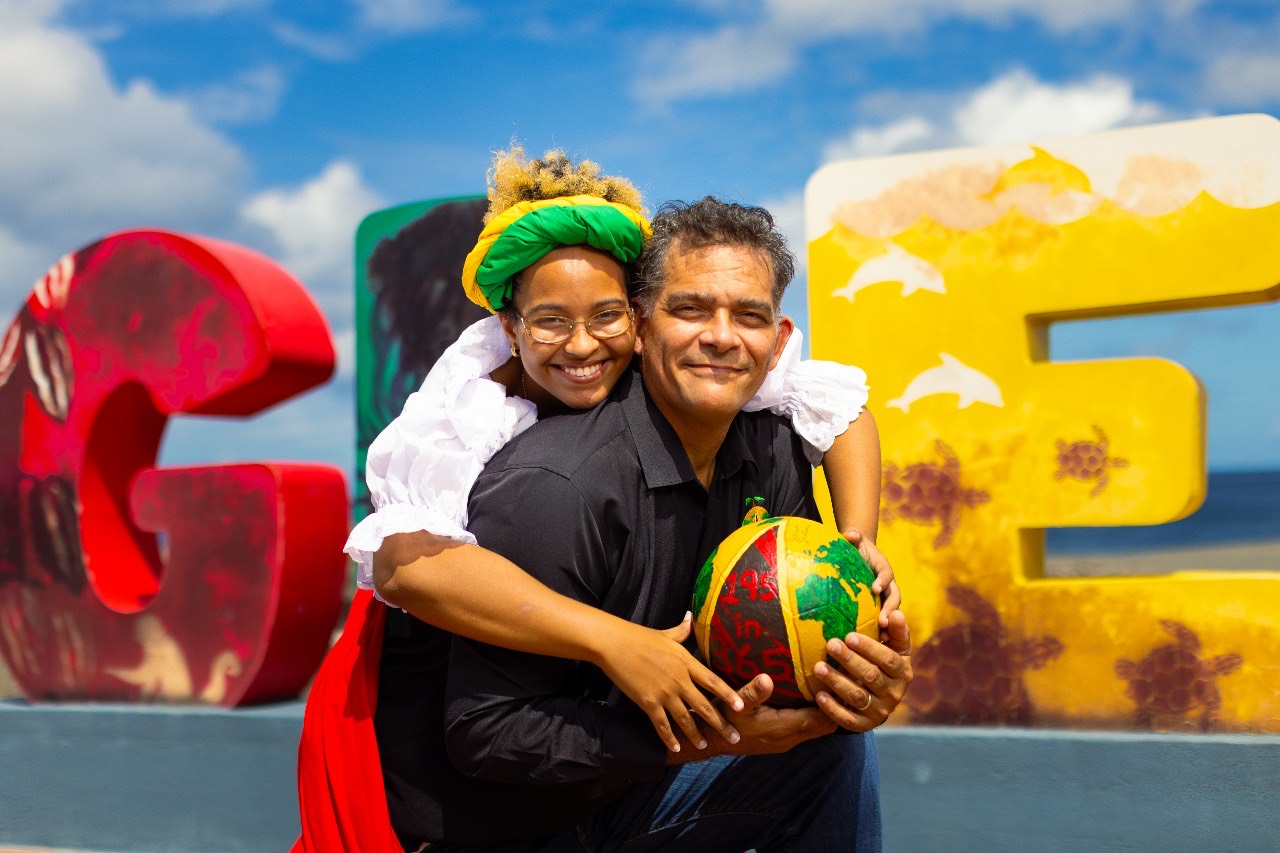
Johann Hoschtialek
Two years ago, I slipped while walking down the stairs at home and broke my ankle. For three months, I lived with a disability. It was temporary, but its impact was permanent. I struggled to climb our 39 stairs, relied on my wife and children for basic tasks, and faced a world that suddenly felt hostile, no accessible parking, no safe pathways, no consideration. I even faceplanted on a wet supermarket floor. That experience was my awakening. It fortified my stance as a staunch advocate for inclusion and equality for those less fortunate.
Later that year, Grenada hosted the first Caribbean Disability Conference. There, I listened to stories from across the region. Parents and individuals navigating systems that treated persons with disabilities as second-class citizens. Whether hidden, physical, visual, or hearing impairments, the message was clear: our infrastructure, our laws, our schools, and our climate response were built to exclude.
Climate change is real. I’ve lived through two devastating hurricanes; one twenty years ago, and another just last year. In both, the added challenges faced by persons with disabilities were glaring. Some struggled to evacuate. Others were placed in shelters with no infrastructure to meet their needs. These experiences hammered home a truth we must all confront: our climate response must be inclusive, or it will fail those who need it most.
Imagine being blind, deaf, or unable to walk and a hurricane is bearing down on you. What could you do alone? What systems are in place to protect you? Now imagine being in a drought-stricken region, forced to relocate. Who is helping you? These are the questions we must ask. And more importantly, answer.
Every major religion teaches us to be our neighbor’s keeper. That principle must guide our climate movement. Empathy is not weakness, it is the foundation of justice. We must embrace those less fortunate and build mechanisms that protect them in times of crisis. Climate justice demands that we dismantle overlapping systems of oppression, racism, poverty, and gender inequality and rebuild with inclusion at the core.
Persons with disabilities bring unique insights into resilience, adaptation, and care. Their lived experiences navigating inaccessible systems can inform better design, from disaster response to urban planning. They are not burdens, they are leaders.
The UN Convention on the Rights of Persons with Disabilities and the Sustainable Development Goals (especially SDG 10 and SDG 13) call for inclusive climate action. But these commitments must be more than symbolic. They must be transformative.
- Climate data, warnings, and education must be accessible, sign language, braille, plain language, assistive tech.
- Emergency plans must account for mobility, sensory, and cognitive needs.
- Shelters, evacuation routes, and aid distribution must be universally designed.
- Persons with disabilities must be included in climate policy-making, not as afterthoughts, but as leaders.
As an environmentalist and parent, I want a better world not just for my children but for all of humanity. That’s why our 195in365 initiative, which mobilizes youth across the globe by travelling to 195 countries of the world within 365 days with youth representatives from each country to address climate change and fulfill the SDGs, has embraced disability inclusion from the start.
Four members of our global team will have disabilities. One with visual impairment, one with hearing impairment, and onewith hidden disabilities and one with physical disability. Their presence is not symbolic. It is revolutionary. They are showing the world that disability is not inability. Their voices matter. Their leadership matters. Disability is not by choice but it’s out of situation but let us not sideline those that are not in these spaces of decision making but let us invite them to share what they need.
Inclusion advocacy is not a side issue; it is the heart of climate justice. As we build a future that is green, just, and sustainable, we must ensure it is also accessible. So let us reimagine climate leadership to include all bodies, all minds, and all voices on this planet to be heard.

No comment