

By Keletso Thobega ~ Botswana
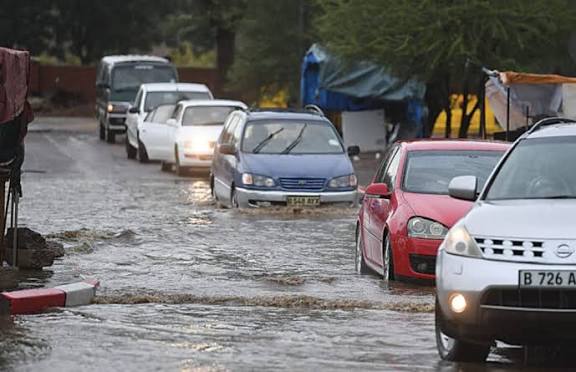
Botswana is historically known as a semi-arid country with little rainfall, but climate change has changed this. Spates of heavy rainfall and flooding that started last year and have continued throughout the festive season, forcing the small country in southern Africa to re-look into climate mitigation efforts.
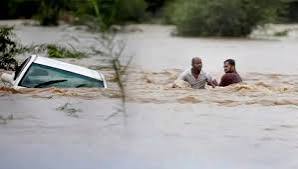
Many residents of Botswana are still counting their losses due to the extreme damage to property and infrastructure, power outages and loss of animal life. According to Government records, during the February 2025 floods, 1749 people across the country were evacuated from their homes and moved to safety at the National Emergency Operation centres. About 2994 people were affected, 705 of those being children. Records also indicate that there have been 15 deaths related to the floods. While the December floods did not claim any lives, more than 100 people were displaced from their homes or suffered losses to property.
While the Botswana Meteorological Services often shares warnings of the floods, not much action or preparedness takes place nationwide. It is only when it starts flooding that Government starts deploying disaster response operations.
Climate change advocate Boitumelo Pauline Marumo said weaknesses such as poor urban drainage systems, worsened flooding in the capital city Gaborone and other highly populated areas such as Tlokweng and Francistown. “It has become apparent that parts of the city and surrounding villages are on flood paths, exposing poor urban planning.
Additionally, flooding and infrastructure damage led to road closures in four districts, an apparent lack of resilient structures,” she said, adding that Botswana needs a structured disaster relief funding mechanism. Marumo further said while the National Policy on Disaster Management (1996), the National Disaster Risk Management Plan (2009) and the National Disaster Risk Reduction Strategy 2013-2018 address all aspects of disaster risk management in the country, preparedness is hampered by out datedness, and lack of monitoring and evaluation.
A 2024/2025 report titled ‘Climate Change Health Vulnerability and Adaptation Assessment,’ indicates that Botswana should brace itself for continued extreme and unpredictable weather conditions. The report highlights that Botswana is “highly vulnerable” to the impacts of climate change, which may harm the country’s key economic sectors and result in food insecurity and climate-sensitive diseases, emphasising that Botswana is among the countries most affected by climate change.
Marumo said that to reduce climate risks, Botswana must integrate climate resilience into national policies and investments. “Strengthening flood-resistant infrastructure by improving drainage, upgrading roads, and protecting power and water facilities from climate shocks is essential. The development of early warning systems is also critical, weather forecasting and real-time community alerts must be improved to ensure faster response times,” she said.
Marumo further said fast-tracking Botswana’s National ESG Strategy is crucial, as is upgrading climate-resilient infrastructure, which should be a national priority, with a focus on improving drainage, flood defences, and electricity and water security. “Botswana must also establish a dedicated Climate Relief Fund to support affected communities. Additionally, expanding early warning systems, flood mapping, and public education on disaster preparedness will ensure that local communities are better equipped to respond to extreme weather events. Ultimately, Botswana must shift from reactive disaster response to proactive climate adaptation to safeguard both lives and livelihoods,” she said.
Climate change policy adviser David Lesolle, who has worked for both Government and private sector, said about 80% of natural disasters are climate-related but Botswana lacks preparedness. He explained that most of the infrastructure in the country was developed many years ago using Meteorological data from about 40 to 50 years ago. “In the past few years we have observed changes to climate and weather patterns such as rainfall intensity, as evidenced by the floods of 2017 and most recently the ones we had in 2025. While about 20 to 40 years ago, rainfall would be 10mm to 20mm per hour, it has now gone up to average 50mm per hour, which is a huge change, and some of our infrastructure could not survive.”
Lesolle said Botswana should build climate resilient infrastructure considering climate change. He noted that no one knows for sure how the erratic rainfall patterns are going to turn out when the climate goes extreme. “Over the past years we have observed changes from extreme drought, heat extremities and super wet weather, so we have to prepare.” Lesolle said this preparedness is not only for infrastructure but also livelihoods and health. “For example, floods can bring outbreaks of diahrea, fever and other waterborne diseases which can burden the public health system. Most notably, climate change affects agriculture and food security which can lead to nutritional deficiencies, hunger and low economic activity,” he said.
Lesolle said developing natural disaster preparedness requires resource mobilization, and in terms of funding, it is not necessary to always look for external funding. “We can develop our own funding mechanisms…For example, Botswana is a country that receives thousands of tourists monthly and millions of visitors annually. Government could develop an air transport levy where each tourist pays a levy of one dollar. That money could go to a fund for natural disaster management…so these tourists are coming here to visit but they are also contributing to protecting the livelihoods of the most vulnerable people of Botswana,” he said.
In 2021, Botswana contributed 0.5% of global greenhouse emissions, totalling 21.2% metric tonnes of carbon dioxide equivalent, which is a 73.6% increase from 2020. Regarding climate change readiness, Botswana scores 0.435, which calls for increased adaptation strategies.
Also Read: Dr. Othniel Yila Champions Indigenous Knowledge as a Pillar for Climate Resilience


No comment