

By Abdirahim Husu
The arrival of offshore drilling vessels in our waters signals something historic: confidence in Somalia’s future, confidence in our stability, and confidence in the potential of our natural resources to contribute to national development. As Somalis, we have every right to see our country benefit from its resources. For decades, Somalia has stood on the margins of global economic opportunity. Today, we are beginning to step into it.
As a Somali, I support this progress.
As a climate activist, I support the responsible use of natural resources to lift our people out of poverty, strengthen our institutions, and build a more resilient nation.
And as someone working closely with climate and environmental coordination within government, I also feel a responsibility to raise an equally important question:
Are we prepared, not just for success, but for risk?
Offshore oil and gas development brings opportunity. But it also brings responsibility.
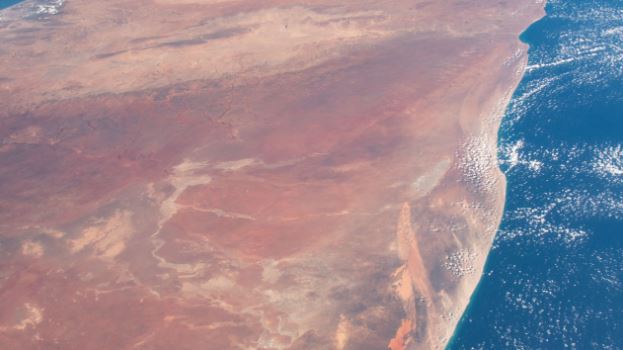
The Indian Ocean is not just water on a map. It is part of Somalia’s life. It feeds our communities, sustains our fishermen, regulates our climate, and connects us to the world. If an oil spill were to occur, the consequences would not be abstract. They would be immediate, visible, and long-lasting.
Oil spills not only affect ecosystems. They affect livelihoods. They affect food security. They affect national confidence.
The question is not whether Somalia should develop its resources. The question is whether Somalia is building, in parallel, the environmental protection systems required to manage that development safely.
Do we have enough trained environmental response personnel? Do we have the technical equipment required to respond quickly at sea? Do we have coordinated national emergency response systems for offshore incidents? Do we have the monitoring capacity to detect problems early?
These are not questions of opposition. They are questions of preparedness.
We do not have to look far to understand why this matters. In 2020, an oil spill near Mauritius severely impacted fisheries, livelihoods, and coastal ecosystems in a country with far greater response capacity than Somalia currently has. Even highly developed countries, such as the United States during the Deepwater Horizon disaster, experienced offshore incidents despite advanced technology, strong regulation, and decades of experience. These examples do not argue against development. They remind us that development must be matched by preparation.
Many countries that are today successful energy producers, such as Norway, did not begin with perfect systems. They built them deliberately, alongside resource development. They invested in environmental regulation, response capacity, and institutional coordination. They understood that protecting their natural environment was not an obstacle to development. It was part of the development.
Somalia must do the same.
This moment presents an opportunity not only to extract resources but to strengthen institutions. To build national capacity. To train Somali professionals. To establish environmental monitoring systems. To develop emergency preparedness frameworks. To ensure that Somalia remains not only resource-rich but also environmentally secure.
Development and environmental protection are not opposites. They are partners. One without the other creates vulnerability. Together, they create sustainability.
Somalia deserves both prosperity and protection.
As we move forward, our responsibility is not to slow progress but to ensure it is guided by foresight, coordination, and care.
Because true national progress is not measured only by what we gain, but by what we protect while gaining it.
Click here to read related post


No comment