

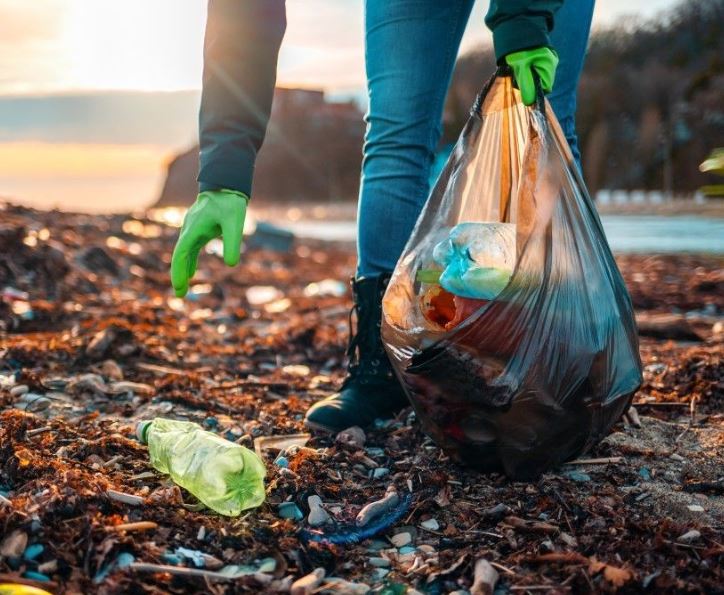
For years, the conversation around waste in Africa has been dominated by images of overflowing dumpsites and plastic-choked waterways. But a growing body of evidence from Uganda, Ethiopia, and the Democratic Republic of Congo suggests a different story is unfolding; one where communities are turning waste into a climate solution.
With support from the Global Alliance for Incinerator Alternatives (GAIA), the Break Free From Plastic (BFFP) movement, and the Plastics Solution Fund (PSF), local organisations have spent the last three years implementing zero waste projects that directly target one of the most potent drivers of climate change: methane emissions.
According to the Intergovernmental Panel on Climate Change (IPCC), the waste sector is the third-largest source of methane emissions globally, a greenhouse gas that traps 82.5 times more heat than carbon dioxide over a 20-year period. Yet, as these projects show, addressing methane through better waste management can yield immediate climate benefits while improving public health and creating jobs.
Uganda: Community-Led Recovery
In Masulita Town, Wakiso District, the organisation End Plastic Pollution (EPP) introduced a zero waste model in an area that previously had little to no waste management infrastructure. The results were swift: waste recovery increased by 30% over the project period, with significant amounts of organic material diverted from the Ssekanyonyi Dumpsite.
Diverting organic waste is critical because rotting organic matter in landfills generates methane. By composting and separating waste at source, the project prevented those emissions from entering the atmosphere. Equally important, local community representatives were trained to lead peer-to-peer education, ensuring the initiative can sustain itself.
“Through our implementation of the zero waste model in Masulita town, we can confirm that the zero waste concepts are an innovation that can unlock the opportunities along the supply chain, making waste a resource,” said Patricia Namwanga of End Plastic Pollution. “We have proven that an integrated approach, empowering waste pickers, mobilising youth, engaging government and using data works.”
Ethiopia: Challenging Incineration, Championing Inclusion
In Addis Ababa’s Woreda 09, Yeka Sub City, Eco-justice Ethiopia has been working to shift the city’s waste paradigm away from centralised, landfill-dependent systems and the growing push for incineration.
The group supported local compost manufacturers to turn organic waste into valuable products while advocating for the formal integration of waste pickers who currently form the backbone of the city’s recycling into official policy. Their work has also influenced national plastic policy and contributed to the development of a city-wide Plastic-Free Guide, ensuring that African civil society perspectives are represented in global treaty negotiations.
“Addis Ababa’s waste system is centralised, landfill-dependent, and under growing pressure from incineration models,” said Eskadar Awgichew of Eco Justice Ethiopia. “We believe that a decentralised zero waste approach can transform the system by diverting organic and plastic waste, formally integrating waste pickers, and replacing false solutions to the waste management crisis with more circular models.”
DRC: Compost, Larvae, and Livelihoods
Perhaps the most striking results come from Bukavu in the Democratic Republic of Congo, where Solidarité pour la Protection des Droits de l’Enfant (SOPRODE) launched the Bukavu Zero Waste City initiative. The project reached more than 100,000 people through awareness campaigns and collected 480 tons of waste that would otherwise have ended up in uncontrolled dumps.
But it is what the organisation did with organic waste that offers a model for climate-smart agriculture. By promoting organic waste recovery, SOPRODE enabled the production of 300 tons of compost and 1.2 tons of black soldier fly larvae, a high-protein animal feed that supports local farmers. Ninety farmers directly benefited from these resources, strengthening food security while reducing reliance on synthetic inputs.
“In Bukavu, in the Democratic Republic of Congo, SOPRODE has demonstrated that organic waste is not a problem but a solution,” said Robert Kitumaini of the organisation. “By transforming it into compost and resources for agriculture, we have contributed to mitigating methane emissions, furthermore, ensuring food security, and creating green jobs for local communities.”
A Blueprint for the Continent
These three projects were highlighted during the Zero Waste Stories from Africa webinar on 26 March 2026, where experts stressed that such local initiatives offer a replicable blueprint for cities across the continent.
The climate case is compelling: reforming the waste sector could reduce global methane emissions by 13%, according to IPCC data. With composting and bio-stabilisation, landfill methane emissions can be cut by up to 95%.
When GAIA was founded 26 years ago, the concept of zero waste was often viewed as unfamiliar in African contexts. Today, its member organisations, End Plastic Pollution, Eco-Justice Ethiopia, and SOPRODE have shown that zero waste is not only possible but is already delivering measurable climate, social, and economic benefits.
As Patricia Namwanga put it, “We have proven that an integrated approach … works.”
Click here to read related news story




No comment