

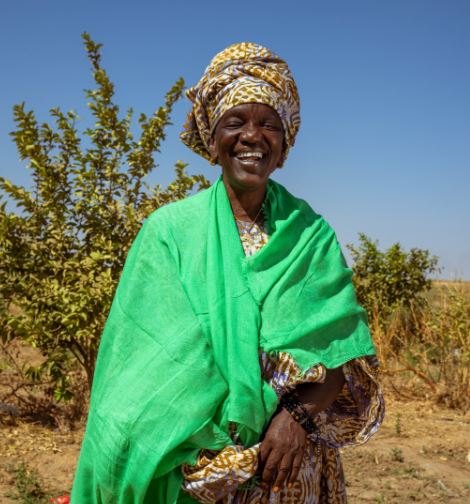
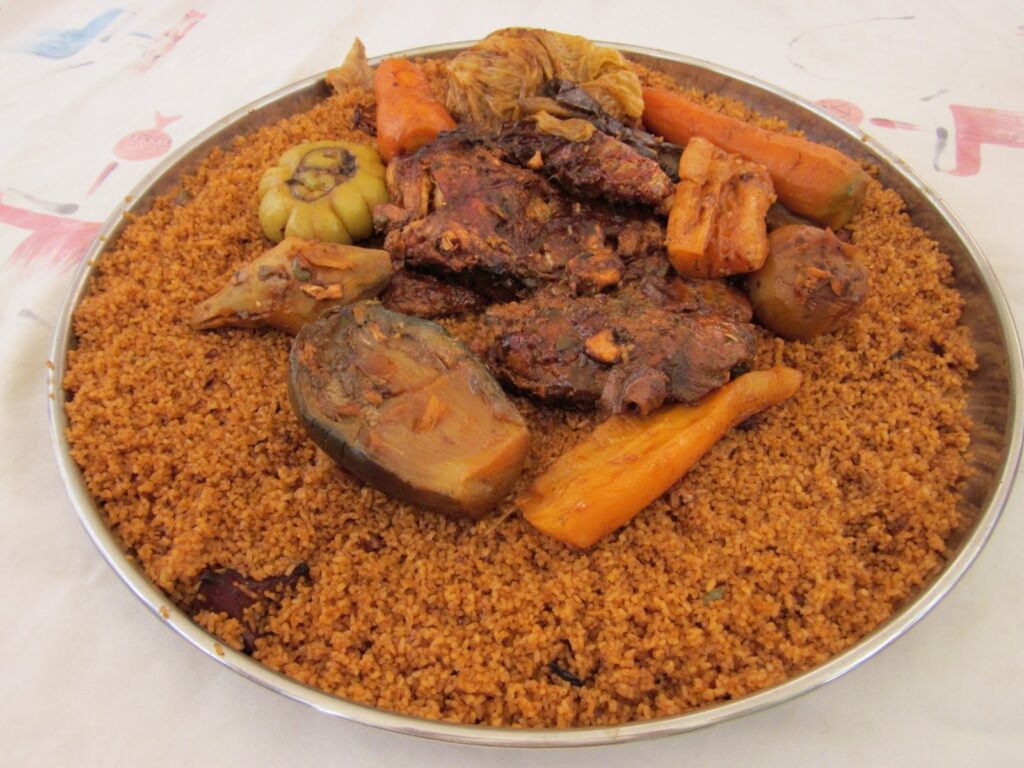
In Saint-Louis, Senegal, caterer Aminata Niang has been cooking ceebu jën, the national dish of fish, vegetables, and rice since she was a child in her mother’s kitchen. But recently, something changed. Instead of imported rice, she now uses local “broken rice” grown near her home. The shift, she explains, is not just about taste. It is about pride, self-reliance, and a quiet revolution led by women.
Senegal imports more than half of its rice. For decades, that dependency has left the country vulnerable to global price shocks, a vulnerability that was made worse by the pandemic, the war in Ukraine, and now, the accelerating impacts of climate change. In response, the government launched the National Rice Self-Sufficiency Program, aiming to produce enough rice to feed the nation by 2030.
But on the ground, the story is more complex and more revealing about who is carrying the weight of adaptation.
Women on the Frontlines
In the Senegal River Valley, Korka Diaw operates a 150-hectare rice farm. She started growing rice in 1991, long before “climate adaptation” became a buzzword. Today, she is an accidental activist, advocating for women farmers whose access to land and finance remains limited despite their central role in the sector.
“Our ancestors farmed for subsistence,” Diaw says. “Now, farming is a revenue-earner. We’re part of the agribusiness industry. We’re feeding the nation, providing jobs and education, building processing facilities, and training the next generation of young women farmers, all in a period of climate uncertainty.”
That uncertainty is reshaping daily life. In the rural village of Mboundoum Barrage, cousins Ndobou Sene Fall and Aby Diop cultivate rice on a 10-hectare field passed down through their family. As adults, they expanded from feeding their extended family to selling in large markets. But the work has grown harder.
“We can no longer sow and reap as in the past,” Fall explains. “The seasons are disrupted. We are forced to change the timing, or the crops will not ripen.” Rains now come earlier and heavier, forcing farmers to plant weeks ahead of schedule, guessing at the right date and hoping the season does not arrive early and wash everything away.
The Missing Ingredient: Finance
The women describe a paradox: demand for local rice is rising, Senegalese consumers want to buy homegrown food, and national policy prioritises self-sufficiency. But climate change has made production unpredictable, and adapting requires resources they do not have.
“For everything you do “to adapt to climate change”, you need money,” Fall says. “Funding is our major problem.”
Her words echo a broader continental reality. Across Africa, women smallholders produce a significant share of the food but receive a fraction of agricultural finance. In Senegal, the IFC and the World Bank have supported rice value chains for decades, but on-the-ground access to capital remains uneven.
CJAM Insight
What makes Senegal’s rice story noteworthy is not just the push for self-sufficiency, but who is leading it. Women like Diaw, Fall, and Diop are not waiting for solutions to arrive from elsewhere. They are adapting planting schedules, training younger women, and demanding access to finance, not as beneficiaries, but as agribusiness owners feeding a nation.
As Diaw puts it: “Everyone has a role to play.”
The stakes go beyond Senegal. Sub-Saharan Africa imports a significant share of its rice, leaving food systems exposed to climate shocks and global market volatility. If women farmers who face the double burden of climate disruption and restricted access to resources can be supported with finance, training, and secure land rights, the ripple effects would be felt across the continent.
For now, the women of the Senegal River Valley continue to sow, adapt, and feed. They are the reason a plate of ceebu jën might soon be made entirely with local rice a small but significant step toward a future where African food systems are resilient, equitable, and rooted in the hands that know the land best.
Source: IFC, “Meet the Women Sowing Senegal’s Future”. Reporting by Climate Justice Africa Magazine



No comment