

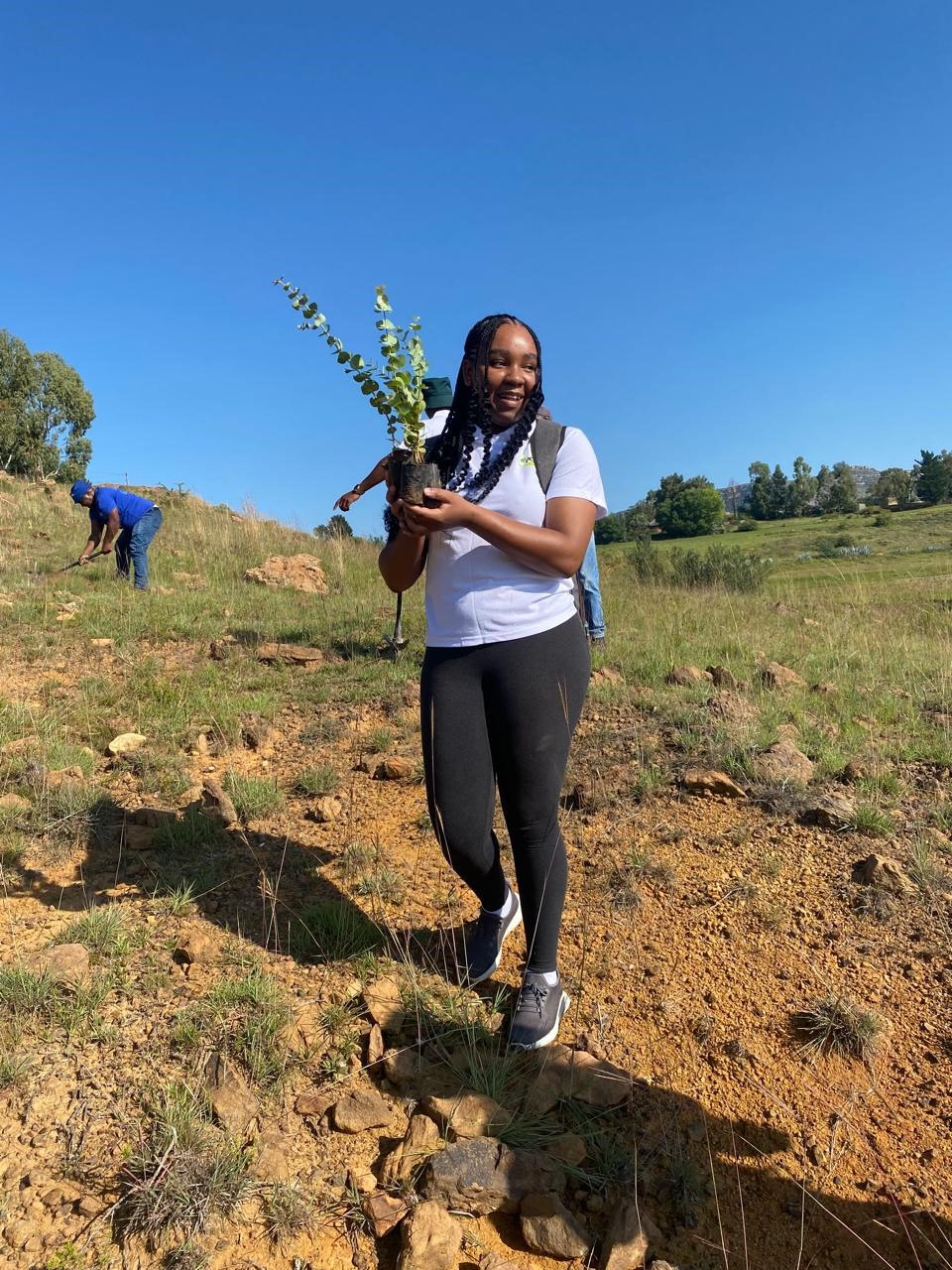
By Rererile Kamohi – Social Worker, Plant One Tree Committee and Climate Change Program Ambassador, Lesotho
Africa has proved time and again to be one of the hardest hit continents globally when it comes to the effects of climate change despite it only contributing less than 4% of global greenhouse gas emissions. Children, women and youth – a vast majority of vulnerable persons – are the first to often feel the heaviest and most devastating impacts of climate change and yet with the relevant support, they are also key players in advancing inclusive climate justice and sustainable development. The transition to green has become even more of an urgent call today considering the continuously increasing and varying threats to climate resilience for these select groups and as majority of people with lived experiences are within these groups, empowering women and youth led sustainable solutions and innovations may just be the alignment Africa needs to build its resilience to climate change. We need to recognise the critical role that climate-displaced persons, women and youth play in advancing climate action that is rooted in justice, equity and inclusion, all based on the Sustainable Development Goals.
How can we achieve climate justice through inclusive pathways?
Assessing and Understanding Vulnerabilities
Climate vulnerability differs across regions which means that the approaches to climate change will also differ as the effects are not linear for all. Taking Lesotho as a case study, with women being the focus group on the height of their vulnerability to climate change. Women in the highlands are more likely to experience more severe impacts of climate change than the women in the lowlands because in the highlands, most women rely on subsistence farming to meet theirs and their families’ daily nutritional needs. As part of the communities with lived experiences, we need to promote gender-inclusive decision making i.e girls and women must be included in formulating/designing, implementing and evaluating national policies and programs as these decisions affect their livelihoods and wellbeing whereas they are often underrepresented in these settings. Women-led initiatives must be put at the forefront for any gender issues related to climate change as they are the key players in achieving a just, equitable and inclusive environment for all.
Vulnerability assessments should be undertaken with intent to form long-term forecasting, policy and planning because the current vulnerability assessments and other policy development tools used do not consider other social impacts of climate change. Climate Action should adopt both Horizontal and Vertical integration approaches to maximize impact at the local, sub-national, national and even at the transboundary level.
Capacity Building and Support
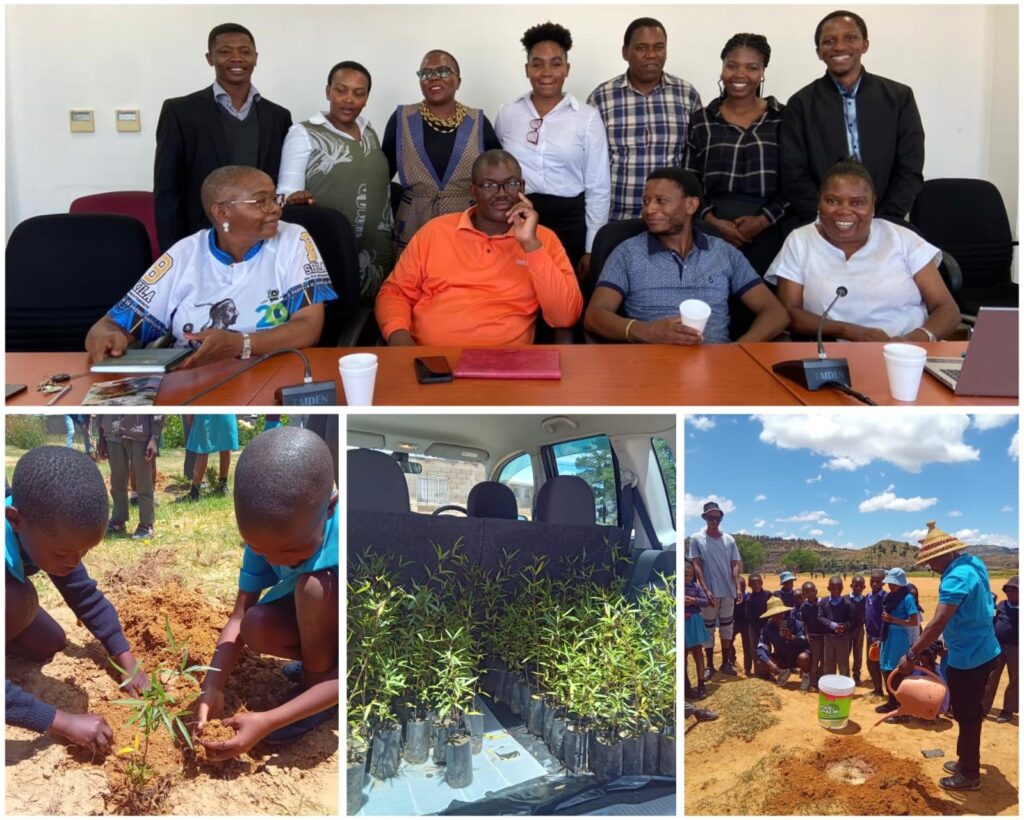
Capacity building and the creation of enabling environments are the core to building individual and community resilience through climate mitigation and adaptation. Africa needs investment – and not just financial investment but skill/capacity building and technical support for youth and women led initiatives in support of technology and innovations that can advance the green transition. Youth inclusion needs to be prioritized by making youth-inclusive processes integral to climate action and implementation of climate mitigation and adaptation strategies, highlighting the importance of youth participation and engagement. There needs to be more focus on training and capacity building to strengthen youth participation in decision-making processes as well as make climate information easier to disseminate by localizing it and adapting it to the context of youth, especially youth without formal education who would like to make meaningful contributions to climate and environmental action as well as achieve a just transition. Building the capacity of youth-led organisations can be seen through, for example, Plant One Tree – a Lesotho based youth-led environmental organisation focused on greening Lesotho through planting indigenous, fruit and forest trees, climate education, advocacy and policy influencing. Plant One Tree has recently received expert-led training from the Global Center on Adaptation and been selected as the In-Country Focal Point for the African Youth Adaptation Network to “strengthen the adaptive capacity of youth-led organizations across Africa”. This translates to the empowerment of young people through the training-of-trainers program that was designed to equip young delegates to replicate national-level initiatives in their home countries to strengthen community resilience worldwide thus recognising their efforts in building climate resilience internally (locally) and externally (internationally).
Climate Finance
Access to resources, particularly green finance, has been one of the biggest challenges when it comes to climate action globally. Structural barriers have hindered the movement of innovative and sustainable solutions from the ideation stage to prototyping, implementation and scaling. The finance systems need to be reviewed so as to allow easier access for youth-led and women-led climate action, mobilising individuals and communities where change is needed the most. A structure/ system needs to be established to ensure equity, transparency and accessibility so as to shape climate action that is responsive to needs, vulnerabilities and builds on the strengths of the affected communities as well as implementation parties.
Equity and Equality
Africa has, over the years, reached newer heights in advancing gender mainstreaming and achieving equality through inclusive action, with the development of frameworks laid out to formulate new policies as well as review and amend existing ones. Such policies – in Lesotho – include the Gender and Development Policy (2018-2030) to empower women as a means of mainstreaming gender into all aspects of national development and addressing some of the following gender gaps: limited awareness on gender inclusion, lack of gender-focused budgeting and insufficient research on the effects of climate change on girls and women. Gender reports need to be guided by data from sectors that specialise in gender-focused research and analysis as there is a need to understand gender and climate change on a level deeper than statistics. This will enable accurate data collection with contributions from lived-experience populations and gender experts. Women have a powerful and pivotal role to play in climate action. When we support and invest in them—through education, leadership, and jobs in clean energy or farming—we make the world stronger and fairer. By fighting for gender equality and youth-led climate solutions together, we can protect both people and the planet.
Common but Differentiated Responsibilities
In the journey to achieving a just and green energy transition, investment, transparency and accountability need to be made priority for not only African leaders but global leaders. Having recently researched and analysed the Nationally Determined Contributions (NDCs), we have to acknowledge our different contributions and responsibilities for global emissions even though the goal to reducing these emissions may be shared for all countries. Partnerships and collaborations have been key to catalysing and achieving inclusive pathways for climate justice in Africa but looking at the conditional and unconditional emission reduction targets, African leaders need to reflect and review the existing mechanisms because the reliance of Africa on foreign investment is astounding. Yes, this does not take away from leaders’ efforts of meeting unconditional emission reduction targets by themselves due to parties not taking adequate responsibility for their emissions but we need to look further into decreasing the conditional reduction targets and increasing our very own revenue and investments so that we meet our unconditional emission reduction targets without falling victim to external factors that may go awry or cease altogether – like we have seen happening to HIV services aided by the United States of America in Africa.
In as much as foreign investments, partnerships and collaborations can be beneficial, they also put in question our ability and capacity to become a revolution in climate justice, all achieved on our own as Africa. This bags the hypothetical question: If all donor funding were to cease at once in all African countries, could Africa stand on its own or collapse? We can all assume the answer to this.
Accountability
Follow-up on the implementation processes should become mandatory so as to analyse the reach and impact of the measures put in place to ensure inclusive climate action, and leaders need to be held accountable for the implementation and success/failure of the commitments they make thus ensuring transparency in the green transition. Policies pertaining to energy need to be formulated, reviewed and implemented to mitigate the current levels of energy consumption with measures being put in line to hold each sector responsible for their emission contributions. African leaders must invest in the transition to green, promote the rehabilitation and protection of biodiversity, with indigenous groups, women and youth being made central to these developments as well as encourage and promote sustainable development in all its forms if they want to create an Africa that they can be proud to leave behind for the coming generations. Building climate resilience is a collective effort and just like an automotive, when one gear moves, the rest will follow.


No comment