

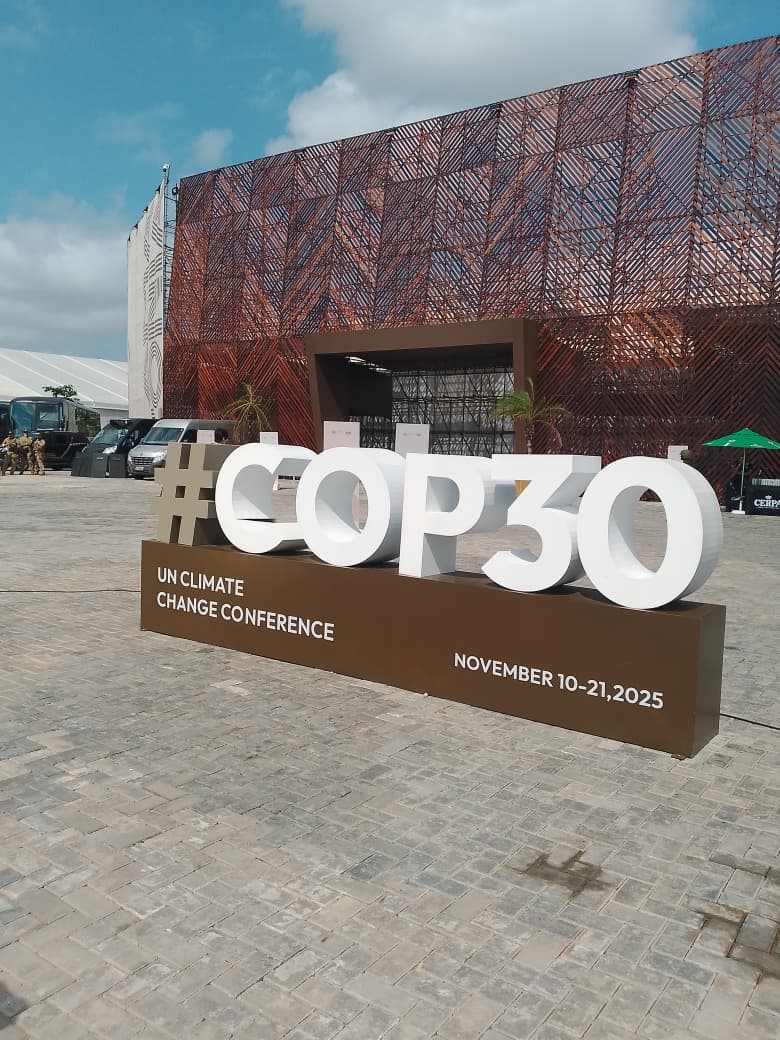
COP 30 has marked a turning point in global climate action, delivering one of the strongest demonstrations yet that real-economy transformation is accelerating across the world. From energy and transport to forests, oceans, food systems and cities, this year’s Global Climate Action Agenda showcased how governments, businesses, financial institutions, and communities are moving from pledges to implementation at unprecedented scale.
At the heart of the outcomes is a trillion-dollar investment pipeline dedicated to expanding and strengthening power grids and renewable energy systems worldwide. Under the Global Climate Action Agenda, alliances such as the Green Grids Initiative and the Utilities for Net Zero Alliance advanced a unified global plan to triple renewable capacity by 2030 and modernize power grids to withstand the demands of a rapidly electrifying world. These actions form the backbone of a decisive shift away from fossil fuels.
Across nature and food systems, commitments have surged. Hundreds of millions of hectares of forests, mangroves, wetlands and ocean ecosystems are now under protection or active restoration, backed by billions in new finance. Millions of farmers are transitioning to regenerative agriculture, supported by global initiatives to enhance resilience across entire value chains. These efforts not only safeguard biodiversity but also strengthen livelihoods and food security in vulnerable regions.
Cities, regions and businesses are also stepping up, driving resilience and emission reductions at scale. More than 437 million people have become more climate-resilient through global campaigns, while industries ranging from shipping and aviation to steel and cement are now adopting coordinated plans to achieve near-zero emissions. New coalitions, cleaner technologies, large-scale deployment of sustainable fuels and massive private-sector investments signal a structural shift within the global economy.
Finance flows are beginning to match ambition. Trillions of dollars are being mobilized for clean energy, adaptation, nature-based solutions and green industry, supported by stronger partnerships between governments, multilateral banks, investors and philanthropies. This positions climate action not just as a moral imperative, but as a new economic frontier, one capable of delivering stability, innovation and opportunity for both people and planet.
COP 30 demonstrates that global climate action is no longer theoretical. It is operational, measurable, and accelerating. The world is moving through collaboration, technology, and shared purpose towards a future where climate ambition translates into real-world impact.



No comment