

As the High Seas Treaty; the historic Agreement on the Conservation and Sustainable Use of Marine Biological Diversity of Areas Beyond National Jurisdiction enters into force, the world stands at a crossroads for ocean governance. Covering nearly two-thirds of our planetary waters and underpinning climate resilience, biodiversity, food security, and economic futures, this treaty offers a framework for the sustainable stewardship of the global oceans.
Yet, leadership is not proclaimed by negotiation alone, it is solidified through action, and Africa’s leadership is urgently required now more than ever.
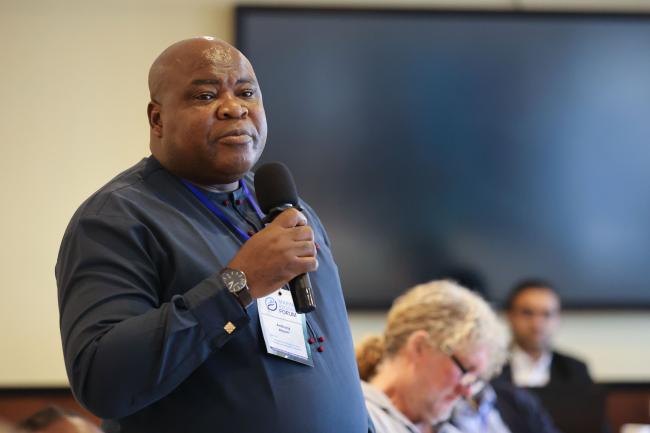
At a recent convening, Mr Anthony Akpan, President of the Lagos-based Pan African Vision for the Environment (PAVE), a UNEP-accredited environmental advocacy organisation focused on sustainable development, ocean literacy, climate change, clean energy, and stakeholder empowerment delivered a compelling address underscoring this imperative.
Mr Akpan framed the treaty not as distant diplomacy but as a decisive opportunity for Africa to drive forward climate justice and ocean equity, from policymaking halls to the shores and seascapes of millions who depend on healthy oceans for their livelihoods and futures. As he articulated, the continent must not only ratify agreements but also lead in ocean governance, literacy, and implementation, transforming global ambitions into real, equitable outcomes for African communities.
His leadership message was clear: ocean literacy is foundational to justice. Without broad public understanding of the ocean’s role in climate regulation, food systems, and economic opportunity, the promise of the High Seas Treaty remains abstract. Bolstering awareness, capacity, and civic engagement across coastal and inland populations alike strengthens the political mandate for ratification and effective implementation.
But it is not only civil society that must rise. African states must translate diplomatic success into domestic action, ratifying the treaty swiftly and enabling robust participation in its governing processes. As of early 2026, a significant portion of the continent has yet to ratify the treaty, which could diminish African influence in shaping the rules governing marine protected areas, benefit-sharing, and environmental impact assessments.
This is a leadership gap with deep consequences: leading voices shape rules, not spectators. Ratification is not a bureaucratic hurdle, it is Africa’s declaration of intent to steward the global commons with justice, foresight, and inclusive development at its core.
Akpan’s address, rooted in PAVE’s mission to mobilise policy dialogue and public participation, reminds us that Africa’s leadership must extend beyond capital cities and international forums into every community, classroom, and coastal village. It is through this breadth of engagement that treaty commitments gain meaning and momentum.
For Climate Justice Africa Magazine, the call is unequivocal: Africa must lead from conviction and coordination, uniting civil society, governments, regional bodies, and pan-African institutions behind a shared vision for oceans that sustain life, livelihoods, and climate resilience.
The High Seas Treaty offers a blueprint for equitable ocean governance; Africa’s leaders must now ensure it becomes a reality that delivers for today’s generations and those still to come.



No comment