
Talks on the Kampala Declaration centred on Côte d’Ivoire’s next national agricultural investment programme, with irrigation, local processing and climate resilience among the priorities.
Côte d’Ivoire and the African Union have held talks on how the country’s next agricultural investment programme can advance Africa’s commitments on food security, rural livelihoods and climate resilience.
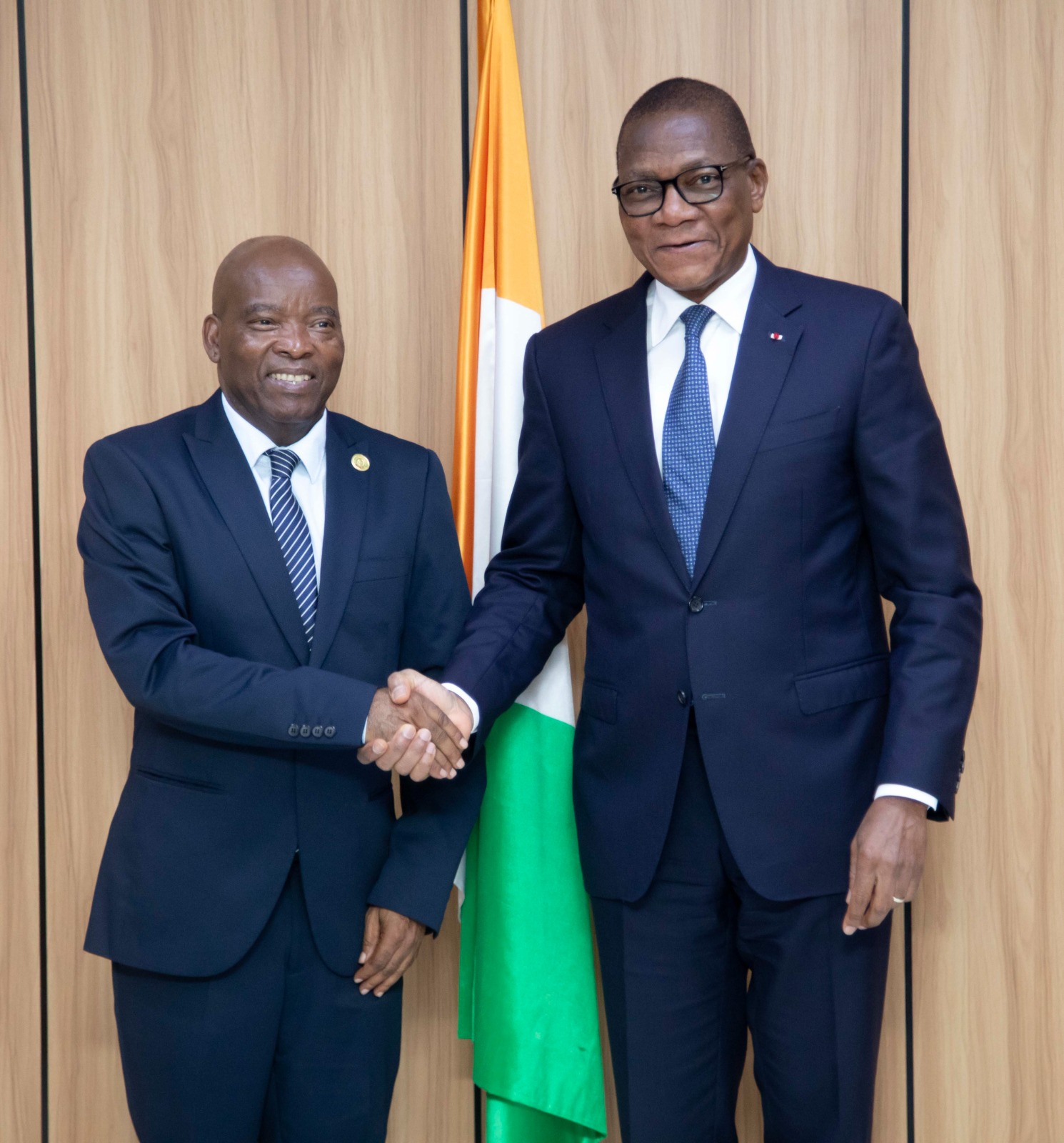
Côte d’Ivoire’s Minister of Agriculture, Rural Development and Food Crops, Bruno Nabagné Koné, met H.E. Moses Vilakati, Commissioner for Agriculture, Rural Development, Blue Economy and Sustainable Environment at the African Union Commission on 24 November 2026 during a four-day mission focused on implementing the Kampala Declaration. Koné sought technical and financial support to prepare Côte d’Ivoire’s third National Agricultural Investment Programme, according to the Ivorian agriculture ministry.
The ministry said Koné outlined five priorities for the country’s agricultural policy: strengthening food sovereignty, modernising production, improving access to finance, securing rural land tenure and building climate resilience. Vilakati said initiatives already under way in Côte d’Ivoire aligned with the Kampala commitments, the ministry reported.
The Kampala Declaration guides the 2026–2035 phase of the Comprehensive Africa Agriculture Development Programme (CAADP), the AU’s flagship framework for agricultural development. The programme began in Maputo in 2003 with commitments on agricultural spending and growth. The 2014 Malabo Declaration broadened the agenda to include hunger, poverty, trade and resilience, with the CAADP Biennial Review tracking countries’ progress. The AU Commission reported that no country was on track to meet the full set of Malabo targets by the 2025 deadline.
Under Kampala, AU member states have committed to increasing agrifood output by 45 per cent, halving post-harvest losses and tripling trade among African countries in agrifood products and inputs by 2035. They also aim to mobilise US$100 billion in public and private investment across the continent and allocate at least 10 per cent of annual public spending to agrifood systems. The declaration calls for better access to finance, including climate finance, for farmers and small and medium-sized food producers and processors.
Irrigation and processing feature in Côte d’Ivoire proposals
The AU Commission’s mission presentation identified rice as one area where investment could strengthen domestic supply. Côte d’Ivoire spent 644 billion CFA francs, about US$1.11 billion, on rice imports in 2025, according to Ivorian customs figures cited in the presentation. That was just over a quarter of the country’s total food import bill, which rose 15.5 per cent to about 2.52 trillion CFA francs, or US$4.33 billion.
The presentation estimated that about 89,000 hectares of Côte d’Ivoire’s roughly 431,000 hectares of national irrigation potential were in use. It highlighted the Kossou Dam on the White Bandama River in central Côte d’Ivoire to illustrate how existing water infrastructure might support irrigated production. The commission said development would require feasibility studies, environmental safeguards and investment planning.
The proposed rice investment would link irrigation and access to quality seed with mechanisation, local milling, storage and transport. Irrigation could help growers manage unreliable rainfall, while better storage and transport could help them get more of their harvest to buyers. The commission also identified maize and edible oils as priorities and called for closer coordination among the ministries responsible for agriculture, trade, finance, water and industry.
The ministry’s account gave no funding amount or timetable for preparing the national programme. The AU presentation identified soil, water availability, land tenure and market access as factors to assess before choosing sites for investment. Those assessments would help determine where projects can operate and how farmers could use the irrigation, mills and storage under consideration.


No comment