

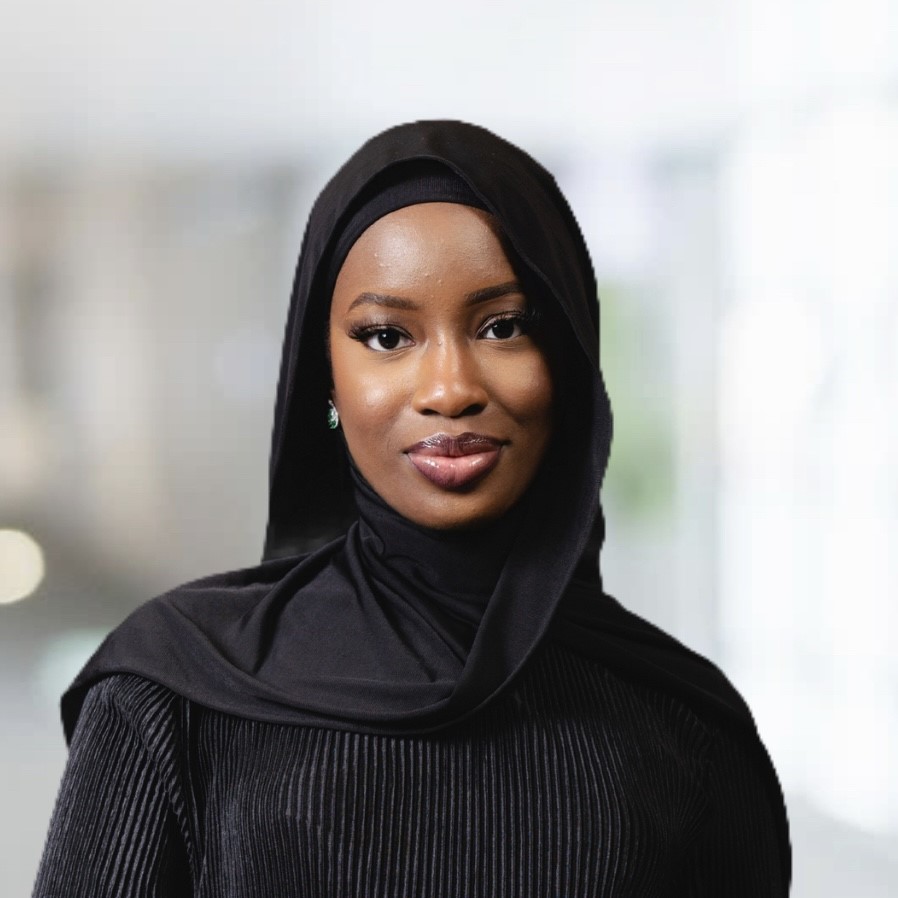
By Ramatoulaye Corréa
Disclaimer:
This article is based on personal field interviews and additional documented examples from public sources.
All testimonies and scenes described below reflect real events as told by community members and have been documented with their permission and insights.
In Mouit, a coastal village in northern Senegal, life by the ocean once meant beauty and abundance: the sound of waves at dawn, the breeze carrying the promise of fish, and generations growing up with the sea as their horizon. Yet for many women, this cherished proximity has turned into peril.
They described to me what it feels like to wake up with the ocean invading your home. Their voices were calm but heavy with loss: one carried her grandmother through floodwater; another held her children as the walls collapsed. By dawn, their houses had vanished, and families were forced to relocate inland, leaving behind the only homes they had ever known. For them, climate change is not tomorrow’s threat, it is last night’s reality.
As we listened, together with other volunteers from the Climate Linguère Club, we felt an overwhelming sadness and a quiet rage at the injustice. These families had done nothing to cause climate change, yet they were left to face its worst consequences with little support. The women told us about promises of help that never came, of officials who vowed to relocate them or build seawalls but delivered nothing. Despite this situation, the women of Mouit welcomed us generously. I felt grateful, humbled that they trusted us, strangers, with their stories and hopes. That afternoon, I promised myself to carry their voices beyond that village.
Leaving the office and stepping into the field is sometimes the only way to grasp the true nature of this crisis. Listening to the women of Mouit made one thing undeniable: for our African countries, the most urgent challenge is not abstract debates on carbon emissions or scientific targets, but the concrete question of adaptation. It is about survival, dignity, and ensuring that communities on the frontlines are heard and supported. Their stories remind us that climate action must start by honouring those already living through disaster, and by fighting alongside them for just and effective adaptation. In these coastal communities, it also became clear that women carry a double burden: protecting both their families and their livelihoods against the climate crisis.
A Double Burden: Gendered Economic Exposure & Informality
In places like Saint-Louis or Bargny, women are the backbone of coastal life. They nurture families, keep communities connected, and sustain local economies through their work. In traditional fishing villages, while men venture out to sea, it is often women who buy, smoke, process, and sell the catch, ensuring food security and
income for households. Yet this vital role makes them especially vulnerable: when floods strike in the middle of the night, it is these same women who rush to rescue their children, and when the ocean advances or fish stocks collapse, their livelihoods can vanish almost instantly
Zooming out to the national picture, we see that Senegal’s women are indeed at the heart of its economy, and at the forefront of its vulnerabilities. Women make up nearly half of Senegal’s population, and they form the backbone of the informal economy that most families depend on. It has been reported that roughly seven in ten Senegalese women work in what’s termed “vulnerable employment, jobs that are precarious, low-paying, and lacking basic security. Whether it’s selling produce in the market, processing fish by the shore, or tending urban vegetable gardens, most of these women work without contracts, insurance, or any formal safety net.
In fact, between 2015 and 2019 about 80% of employed women in Senegal were working in the informal sector, with no protections like pensions or paid leave Paradoxically, this strong and industrious segment of society is also among the most exposed to shocks. When a flood or coastal erosion event strikes, it is these informal market traders, fish processors, and home-based entrepreneurs who risk losing everything, and who have the least resources to rebuild. A single high tide can sweep away years of savings invested in a fish-drying business. A sudden flood can destroy stock, equipment, and storehouses that were never insured or registered. Women in the informal sector risk being pushed deeper into poverty, not for lack of effort or initiative or skill but because the system offers them no safety net.
As climate change intensifies, vulnerability cannot be understood through gender alone. Age, disability, and social status often determine who is most exposed and who has the fewest options when disaster strikes. Older women living the difficulty of fleeing sudden floods or even women living with disabilities are often invisible in adaptation programs, facing barriers to relocation or livelihood support. And for families already living in poverty, the loss of even a modest home or fish-smoking shed can erase years of effort. Men too are affected as fish stocks decline and traditional livelihoods erode, forcing difficult decisions about migration or new forms of work.
As fish stocks collapse along Senegal’s coast, men’s roles in coastal households are also shifting. Many migrate seasonally to Dakar or abroad, seeking income through construction or informal labor. While remittances help, their absence leaves women with heavier responsibility for feeding families, sustaining local economies, and caring for children and the elderly. This imbalance adds another layer to the injustice: climate shocks are not only destroying livelihoods, they are reshaping households in ways that deepen women’s already disproportionate burdens.
Building true resilience in Senegal will mean to support these women with recovery funds, micro-insurance and capacities to adapt. Protecting their livelihoods is protecting the survival and dignity of the entire community.
Climate Justice: Those Who Did Least are Suffering Most
All of this leads us to the heart of the matter: climate justice. For communities, climate change is not an abstract debate about carbon budgets: it is an everyday fight for the right to live and adapt in the face of a crisis they did nothing to cause. These families have contributed almost nothing to the greenhouse gas emissions that drive sea-level rise, yet they are the ones watching their homes and hopes to get washed away by the encroaching ocean. This stark inequality is what climate justice is about. It’s not only about cutting emissions in wealthy, industrialized nations; it’s about fairness and support on the frontlines of the climate emergency. Climate justice means recognizing that a mother in Senegal, who never asked for a changing climate, shouldn’t have to face its fury alone. It means ensuring that those who are most affected, especially women caregivers and breadwinners at the coast, get the resources and support they need to protect their families and livelihoods as the environment around them shifts.
A fisherwoman from Mouit captured the depth of this injustice: many women risk, and sometimes lose, their lives venturing farther into the sea to gather oysters without training or equipment.
“We’ve been losing a lot of women”, she simply said because they never had the chance at safer work, education, access to finance or inclusion in their community’s future.
Inclusive pathways to justice
True climate justice would bridge the gap between the resilience of frontline communities and the resources they’re provided. The women and men living through Senegal and West Africa’s coast erosion crisis have shown remarkable strength and ingenuity: from organizing local youth to fill sandbags, to creating rotating savings groups to help each other after disasters. What they lack are the funds, infrastructure, and larger-scale support to match their resilience.
Bridging this gap starts with amplifying women’s voices so that adaptation funds and policies reach those who need them most.
Access to Adaptation Finance
A persistent barrier for frontline communities is financial exclusion. Women often lack collateral and formal credit, limiting their ability to invest in climate resilience. To Afi Global, nearly 980 million women worldwide are excluded from formal
finance systems, contributing to a 9% gender gap in access across developing countries.
To bridge this gap, stakeholders can co-create a locally-led adaptation initiatives that channels adaptation resources directly to women-led community initiatives. Tailored micro-credit schemes, women-focused climate funds, and community cooperatives are proven approaches.
For example, in Senegal and Côte d’Ivoire, projects have organized women’s savings and credit associations and even set up “climate solidarity” loan lines to fund women’s adaptation initiatives. Such gender-informed financing not only empowers women to lead local projects but also yields high returns in community resilience.
Notably, global climate finance remains skewed; observers noted that only 2% of climate finance flows in 2019,2020 were gender-responsive. Prioritizing women’s access to adaptation funds isn’t just about equity; it makes climate action more effective by unlocking the skills and knowledge of half the population.
Relocation with Dignity
As seas rise, relocation has become inevitable for some coastal communities. However, justice depends on how it is done.
Moving people to higher ground is not enough; schools, jobs, social connection must move with them. Past adaptation efforts in Senegal show why promises often to fall short. A $75 million seawall in Saint-Louis protected the tourist quarter but left fishing families exposed, while more than 10,000 people relocated to Khar Yalla found no schools, clinics, or jobs and reported feeling abandoned.
With camp with no state-run school many children simply stopped attending; Human Rights Watch found about a third are now out of school, with most households pushed below the poverty line. Girls are hit hardest: parents describe daughters leaving studies to work in Dakar or support family expenses. Without schools or services in relocation sites, displacement forces children, especially girls, out of the classroom and into cycles of poverty and inequality. True climate justice demands relocation with dignity: planned with community’s voices at the table and designed to strengthen well-being rather that strip it away.
Sustainable Livelihoods
Building climate justice is also about creating new, resilient ways for families to earn a living. In coastal Senegal, women are pioneering sustainable livelihoods that both adapt to climate change and strengthen the environment.
For generations, women fish processors have smoked and dried fish; in fact, about 90% of traditional fish processing work in Senegal is done by women, often
supporting large families. Today, with fish catches declining and wood for smoking scarce, women are innovating. Some have adopted eco-friendly fish processing techniques, such as improved smoke ovens that use 40% less fuel (reducing deforestation and toxic smoke).
Others are diversifying into aquaculture and agro-forestry. In the Sine Saloum delta, a women’s cooperative shifted from solely harvesting wild oysters to farming them and added beekeeping to their repertoire. The results are striking: by marketing honey and oyster products, these women quadrupled their daily income (from around $8 to $33) and reduced pressure on mangroves.
Across West Africa, women-led groups are leading mangrove restoration projects, replanting mangroves that shield coasts from storms and serve as fish nurseries.
Senegal’s authorities, for example, are working with local women to restore parts of the country’s 200,000 hectares of mangroves. Yet these changes have also opened space for collaboration. Some men who remain are adapting alongside women, turning to boat-building, aquaculture, or joining mangrove restoration projects once seen as “women’s work.” In places like the Sine Saloum, mixed groups now replant mangroves and share the income from oyster and honey production.
These efforts create jobs (the oyster sector alone provides ~6,000 jobs in Senegal, with women as 90% of the workforce) and protect livelihoods long-term. When women are supported to launch sustainable enterprises, from eco-tourism to climate-smart agriculture, the whole community becomes more resilient. Ensuring adaptation finance reaches such grassroots women’s initiatives is key to scaling these successes.
Still, resilience on the ground can only go so far without stronger support from above. Communities have heard many commitments over the years, but too often these have faltered because of weak planning, limited resources, or competing priorities.
Past adaptation efforts in Senegal show why so many bold promises have struggled to deliver real change. Expensive seawalls and relocation schemes have often fallen short because planning was weak, services were missing, and governance was fragmented. In Saint-Louis, for instance, a World Bank-backed seawall shielded the city center but left nearby fishing families exposed, while those moved to Khar Yalla arrived to find no schools, clinics, or jobs; and soon felt abandoned. These experiences reflect deeper challenges: overstretched local authorities, heavy dependence on external donors, and a tendency to favor large investment projects over the needs of vulnerable households. For a Coastal Women’s Climate Fund to truly work, Senegal would need to address these barriers by anchoring the fund in law, ensuring transparent oversight, securing reliable domestic financing, and
guaranteeing women a strong voice in its governance. Only then can communities trust that commitments will be honored and resilience on the ground matched by justice in policy.
Conclusion
Senegal’s coastal women know their fight is Africa’s fight. As a climate activist, I saw this resilience up close. I sat with women who have moved their homes inland twice in a decade yet still refuse to surrender their ancestral shoreline. They spoke of loss, crumbling houses, saltwater invading vegetable plots but also of defiance: planting cassava in sandy soil to make the land hold a little longer.
I imagine a dawn in 2035 where Senegal’s coastline is alive with restored mangroves, thriving markets, and laughter. In this vision, every relocation is planned with dignity, not forced by disaster, and the phrase “climate refugee” has faded into history. The sea still rises, but so do the people, united, hopeful, and heard.
But this future will only come if leaders match community resilience with bold policies. Governments must integrate gender quotas into relocation planning, earmark adaptation funds for women-led enterprises, and enforce coastal regulations to curb illegal fishing and unchecked development. Donors and global polluters must honor their climate finance commitments, channeling resources to locally-led solutions rather than distant bureaucracies. Municipal authorities must invest in infrastructure that protects homes, schools, and clinics in vulnerable zones.
The women on the frontlines have already done their part. They innovate, they rebuild, they protect ecosystems that sustain entire nations. Now it is time for governments, regional bodies, and international partners to do theirs, turning grassroots resilience into concrete climate justice, before the next wave arrives.

No comment