

By Elayne Cronin
I am a documentary filmmaker and photographer dedicated to documenting the infrastructure that underpins daily life. Based at Greentown Labs in Somerville, Massachusetts, North America’s largest climate tech incubator, I make my living collaborating with startup founders and companies to craft creative visual storytelling for brand development. Over time, I have become increasingly aware of a critical absence in the climate conversation: the voices and experiences of working-class labor.
Critical infrastructure often becomes visible only during crises. During the COVID-19 pandemic, essential workers continued their jobs while most of us stayed home, making visible the labor that usually remains unseen but keeps society functioning. Even in regions like the Northeastern United States, where support for the energy transition is strong, labor issues remain peripheral. Discussions often prioritize system efficiency and technological innovation, while the health and well-being of the workforce are treated as secondary concerns.
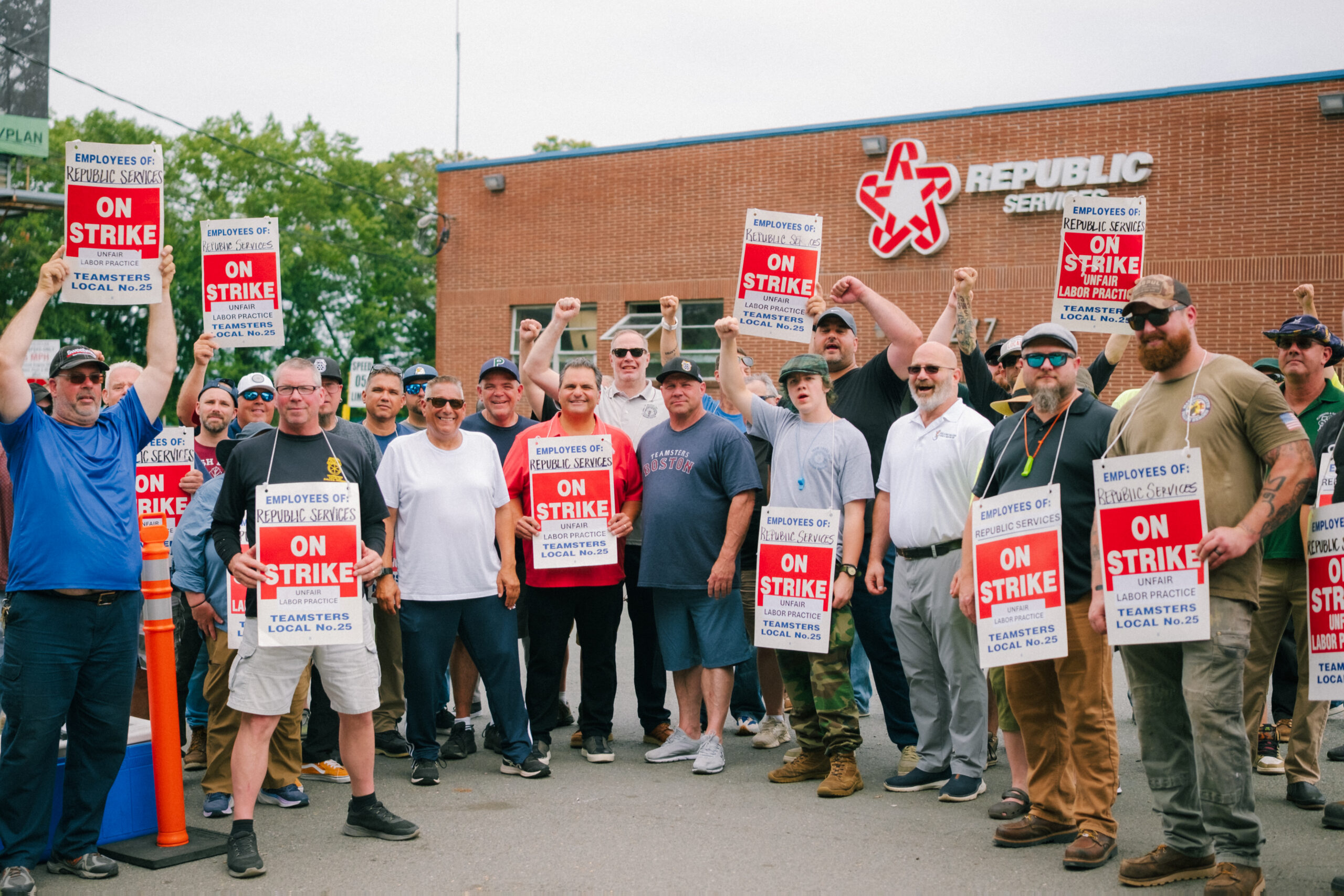
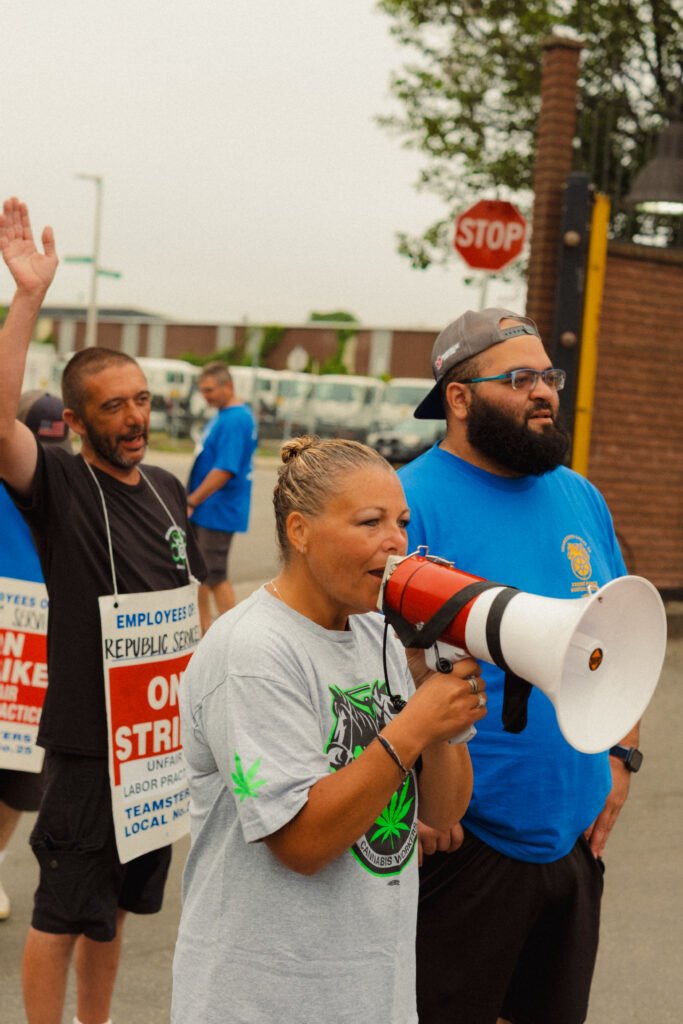
Waste management is fundamental to society’s functioning. When Teamsters Local 25 initiated a union strike against Republic Services—a leading national waste management company—I chose to document sanitation workers on the picket lines. Republic Services manages landfills and recycling facilities across the country and stands among North America’s largest and most profitable providers of waste, recycling, and environmental services.
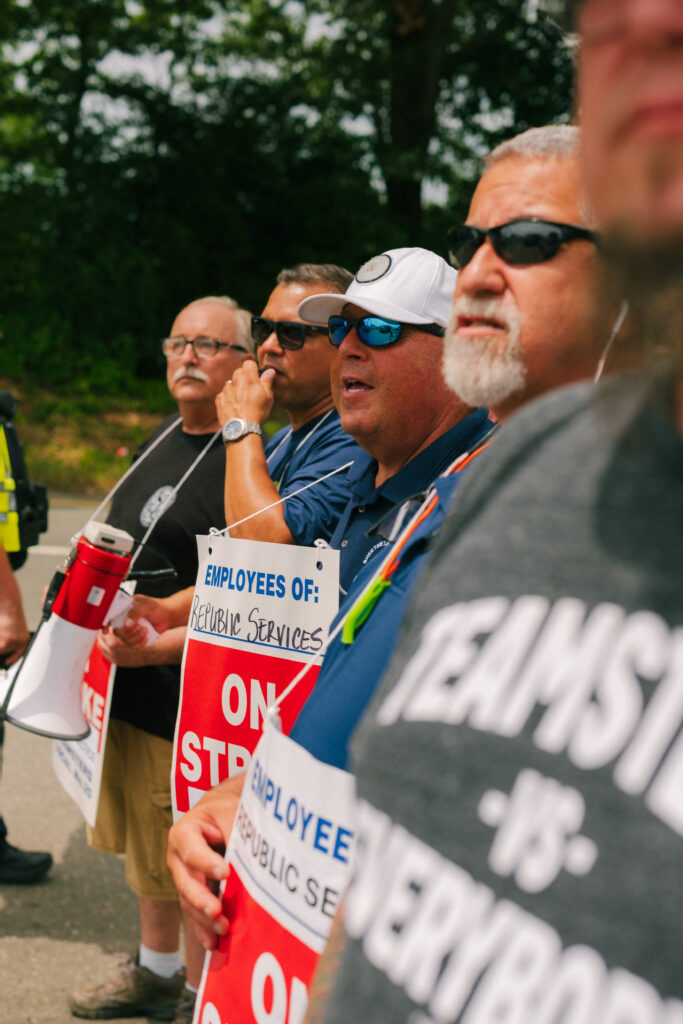
The strike began on July 1, 2025, when union members walked off the job after Republic Services declined to match the wages and benefits offered by competitors in the Boston area. Trash and recycling collection stopped in over a dozen North Shore and Greater Boston municipalities. Republic Services flew in replacement drivers from around the country, but this was not nearly enough to keep up with the mounting waste. My photographs document both the strike itself and the tensions between striking workers and the so-called “scabs”—those who crossed picket lines, undermining worker solidarity. The strike concluded on September 19, 2025, with workers achieving a five-year contract that included pay increases and improved benefits.
I often reflect on how documentary practice can reveal the lived realities within American systems dominated by a few powerful corporate interests. Tracing ownership of essential infrastructure often reveals a small group of individuals controlling significant national assets. In the climate startup world, much effort is devoted to attracting venture capital—especially from funds like Bill Gates’ Breakthrough Energy Ventures—which not only provide substantial funding but also confer institutional legitimacy. Gates’s investments frequently influence the direction of others in the industry.
In this context, Bill Gates, through his private investment firm Cascade Investments, owns about 34 percent of Republic Services. During the strike, the city council in Peabody, Massachusetts, appealed to Gates’s philanthropic reputation, urging him to support a fair and timely resolution in recognition of workers’ contributions. While I do not offer a single explanation for this dynamic, it underscores how wealth in the United States is generated by controlling both current and future infrastructure.
My interest in labor and climate policy began years ago in the long-haul trucking industry. I worked for a company that developed hybrid technology allowing drivers to keep air conditioning running for eight to ten hours without idling their engines. This experience revealed how U.S. environmental policy often places burdens on blue-collar workers. For example, in some states such as California, truck drivers are fined for idling during extreme heat—even when that is sometimes the only way to remain safe and functional in a parked cab.
Photographing the picket lines, meeting the Teamsters, and talking with workers reinforced for me that, despite all the contemporary discussions about AI and automation, critical infrastructure remains deeply human in 2025. These images aim to honor that labor, bear witness to it, and insist that it not be overlooked.


No comment