

By Gift Awokunle
Inaugurated in August, the technical working group has a mandate to turn climate information into earlier health warnings, stronger facilities and protection for vulnerable communities.
As climate change places growing pressure on public health, Oyo State’s decision to establish a Technical Working Group on Climate and Health raises a practical question: how will coordinated planning translate into better protection for residents?
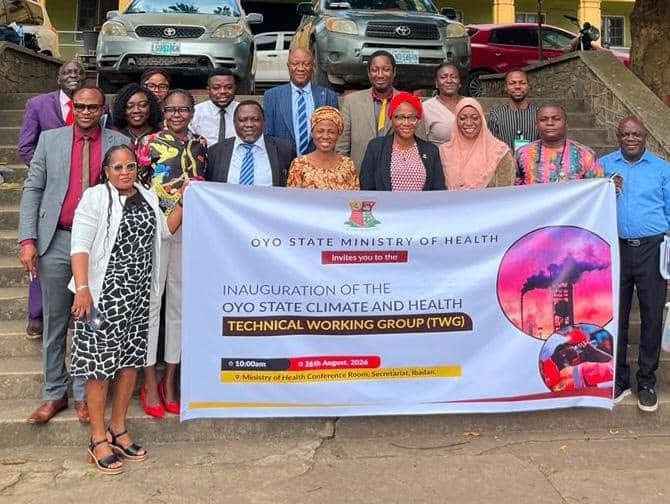
The state government inaugurated the group on August 26, 2026, at the Ministry of Health in Ibadan, Nigeria. Its mandate includes assessing climate-related health risks, strengthening early warning systems and integrating climate resilience into health policies, budgets and services.
According to a statement attributed to Commissioner for Information, Prince Dotun Oyelade, the group brings together government ministries and agencies, technical experts, academia and development partners, including the World Health Organization, UNICEF and the Nigerian Meteorological Agency.
Speaking at the inauguration, Commissioner for Health, Dr Oluwaserimi Ajetunmobi, described climate change as a public health threat with consequences for residents’ health and wellbeing.
She identified heat-related illnesses, flooding, changing disease patterns, respiratory problems and food insecurity among the challenges requiring a coordinated response. Rising temperatures, irregular rainfall and environmental degradation, she said, were already having health implications in the state.
Moving from emergency response to prevention
The group is intended to help the health sector anticipate and prepare for climate-related risks while maintaining essential services during emergencies.
Its responsibilities include mapping vulnerable communities, strengthening disease surveillance, improving public awareness and supporting emergency preparedness. It will also provide technical guidance and generate evidence to inform health planning.
Dr Akintunde Ayinde, Permanent Secretary of the Ministry of Health, represented by Director of Tertiary Health Care Services, Dr Idris Fasasi, said the initiative marked a shift towards prevention, preparedness and resilience.
The proposed work extends to health facilities themselves, including reliable energy, safe water, sanitation and waste management. These services are central to keeping healthcare available when extreme weather disrupts infrastructure and access.
A climate justice test
The group’s mandate explicitly prioritises children, pregnant women, older people, persons with disabilities and people living with chronic illnesses. It also identifies low-income households, farmers, outdoor workers and flood-prone communities.
That focus gives the initiative a climate justice dimension: protection must reach people whose living conditions, livelihoods or health make it harder to withstand climate hazards.
For these groups, effective implementation would mean receiving timely, accessible warnings, understanding how to respond and being able to obtain healthcare during an emergency.
Ajetunmobi stressed that building a resilient health system required participation beyond the health ministry, involving other government agencies, researchers, civil society, businesses and communities.
What delivery should look like
The ministry also called for stronger research partnerships with the University of Ibadan and other institutions to develop locally relevant evidence and solutions.
The next test is implementation. Clear responsibilities, sustainable financing and measurable targets will be necessary to turn the group’s mandate into practical protection.
Future progress can be assessed through the availability of local risk maps, functioning early warning systems, preparedness in vulnerable communities and the ability of health facilities to maintain essential services during disruptions.
The August announcement sets out an institutional framework; it does not establish that these measures are already operational. As the ministry emphasised at the inauguration, success must ultimately be measured through safer communities and a stronger health system, rather than meetings and reports alone.


No comment