

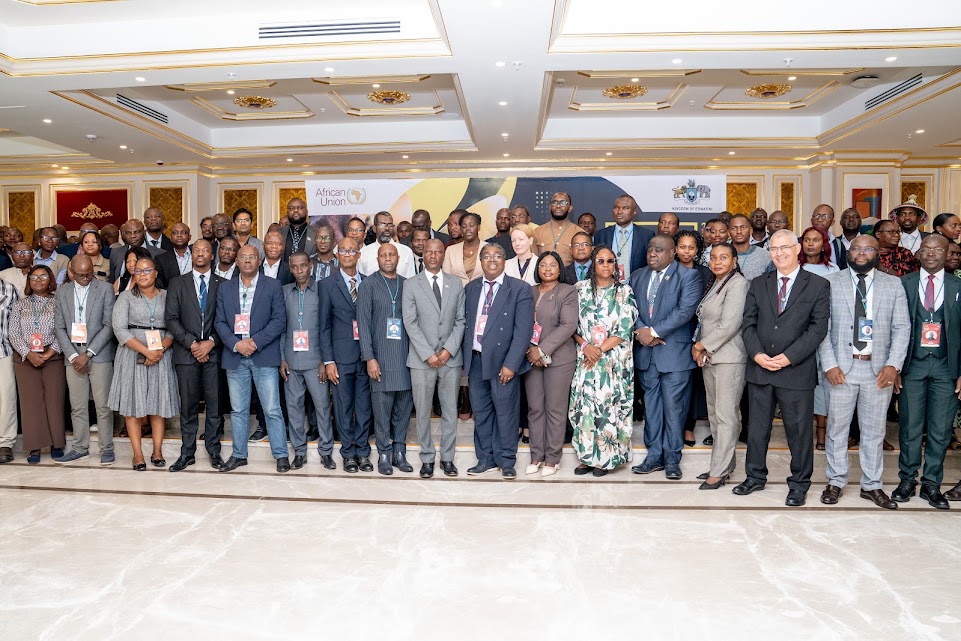
Eswatini’s Minister of Agriculture has called on African governments and investors to strengthen local seed production and research to improve food security, build climate resilience and reduce dependence on imported agricultural technologies.
Speaking during the Senior Officials Meeting of the African Union-organised Seed Summit at Ezulwini Palazzo, Eswatini, on 5 October 2026, the minister called for greater financing, stronger institutions and partnerships that deliver affordable, quality seed to farmers.
The meeting forms part of the High-Level Seed Investment Conference, bringing together policymakers, researchers, financial institutions, development partners, seed companies and farmers’ organisations to advance investment in Africa’s seed sector. The minister clarified that he was opening the officials’ meeting, while King Mswati III would formally open the summit.
He described seed as more than an agricultural input, identifying it as a foundation for food security, economic sovereignty, climate resilience and Africa’s development.
Despite the continent’s vast arable land, diverse farming systems and growing markets, he said agricultural production remained threatened by droughts, floods, heat stress, pests and diseases. Global disruptions were also affecting the availability and affordability of essential inputs.
“Africa cannot achieve agricultural transformation while remaining excessively dependent on external sources for critical agricultural inputs and technologies,” he said.
The minister called for investment in African breeders, scientists and research institutions, alongside seed multiplication, processing, storage, certification and distribution. Such investment, he said, should enable countries to develop varieties suited to their climatic conditions, nutritional needs and markets.
“Africa should not only be a consumer of agricultural technologies developed elsewhere. We must increasingly become developers, producers and exporters of agricultural knowledge, technologies and seed,” he added.
To turn commitments into practical results, he urged governments and financial institutions to reduce investment risks, improve access to finance for local seed companies and connect research with commercial markets. Improved seed, he stressed, must reach smallholder farmers at an affordable price.
He also called for closer regional cooperation on seed regulation, certification, quality assurance and cross-border trade, while safeguarding farmers’ interests. International partnerships should build African expertise and sustainable institutions rather than perpetuate dependency.
Warning against the politicisation of essential agricultural supplies, the minister said seed availability should not be weaponised, emphasising that every person has a right to food.
He maintained that farmers must remain at the centre of seed-sector development, with success measured through timely access to suitable seed, improved incomes, stronger resilience and markets for their harvests. Women and young people, he added, must have meaningful opportunities in seed enterprises and agricultural value chains.
Reaffirming Eswatini’s commitment to research, innovation and regional partnerships, he urged delegates to identify bankable projects, support local enterprises and mobilise public, private and development finance.
“The seed we plant today will determine the harvest of Africa tomorrow,” he said, calling for the conference to be remembered for investments mobilised, partnerships formed and actions initiated.




No comment