
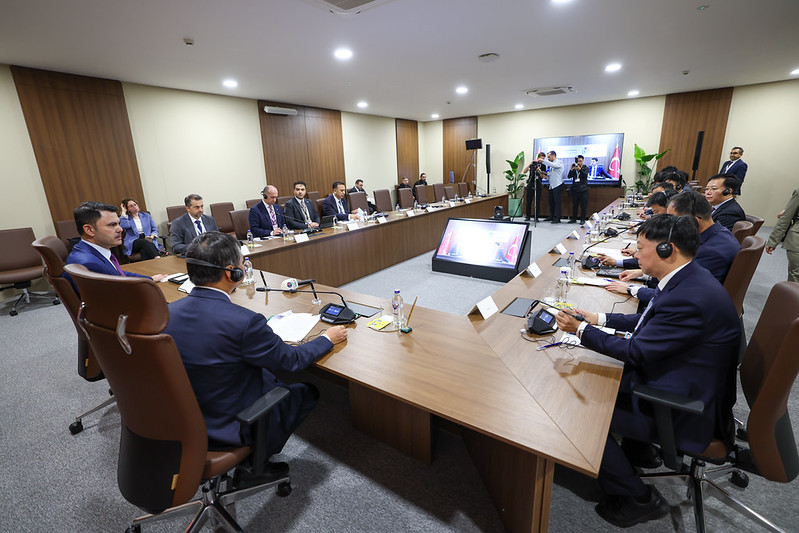
Energy-efficient buildings, urban adaptation and community-led resilience feature in Antalya announcements, alongside a proposed $15 billion Türkiye–China renewable energy investment programme.
More than 100 national leaders have placed resilient cities at the centre of discussions at COP31, backing efforts to turn national climate commitments into safer housing, stronger infrastructure and investment that protects communities from floods, extreme heat and other climate risks.
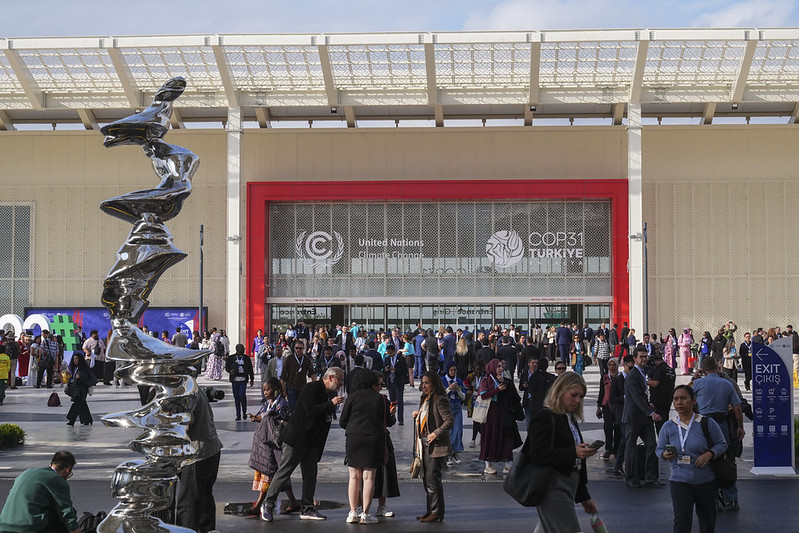
According to a COP31 Presidency statement, the second day of the World Leaders’ Summit focused on accelerating practical action in cities, with announcements spanning energy-efficient buildings, neighbourhood waste reduction, renewable energy and adaptation finance.
The leaders’ discussions took place on 12 November at a high-level dialogue convened by the COP31 Presidency and UN-Habitat. The meeting examined how national climate and adaptation plans could translate into investment in cities and communities.
“Climate action has to deliver where people live. It means safer communities, more efficient homes, stronger infrastructure and better protection from the impacts of a changing climate,” COP31 President Murat Kurum said in the statement.
With more than half of the world’s population living in cities, the discussions linked emissions reduction with the need to protect homes, livelihoods and essential services.
Countries endorsed the Antalya Compact for Energy Efficient Buildings, which supports the COP31 Presidency’s ambition to reduce the operational energy intensity of the global building stock by 25 per cent by 2035, relative to 2020 levels.
The compact also promotes efficient electrification in buildings as part of the Presidency’s “35-by-35” target to increase electricity’s share of global final energy consumption to 35 per cent by 2035. These are Presidency targets advanced through its action agenda.
UN Environment Programme Executive Director Inger Andersen urged governments to translate the buildings commitment into policies and investment that reduce emissions, lower energy bills and improve people’s lives.
COP31 also recognised six sustainable building projects selected through two international competitions designed by Türkiye, supported by the UNEP-hosted Global Alliance for Buildings and Construction and coordinated with the Intergovernmental Council for Buildings and Climate.
The projects showcased how building design and energy performance can reduce consumption.
Housing and inclusion were prominent in UN-Habitat’s message. Its Executive Director, Anacláudia Rossbach, called for adequate housing, improvements to informal settlements and stronger urban resilience to become central to climate action.
The Presidency also outlined its Sustainable Urban Resilience Financing Facility, intended to help countries and cities prepare investment-ready resilience projects, attract public and private finance and strengthen local implementation capacity.
At neighbourhood level, an initial cohort of 20 international Zero Waste Districts is testing waste reduction, reuse, repair and recycling approaches under the Istanbul Zero Waste Action Platform. The initiative aims to expand to 100 districts and measure results, including avoided methane emissions.
Investment announcements accompanied the urban agenda. The COP31 Business Forum brought together more than 600 chief executives and senior business leaders from nearly 300 organisations to discuss electrification, resilient cities and green industrialisation.
Türkiye and China signed a renewable energy cooperation agreement envisaging approximately $15 billion in investment in Türkiye. According to the Presidency, it includes seven gigawatts of new solar and wind capacity, energy storage systems and four gigawatts of electricity transmission capacity, alongside technology transfer and wind turbine equipment production.
The Presidency also launched the Least Developed Countries Green Industrialization Facilitation Mechanism, with ten pilot countries. Led by Türkiye, with the UN Technology Bank for Least Developed Countries serving as secretariat, it aims to connect green industrial projects with technology, technical support and finance.
Separately, projects under the Türkiye Industry Decarbonisation Investment Platform were announced as recipients of up to $250 million from the Climate Investment Funds. The platform aims to mobilise more than $6 billion by 2030.
The Climate Investment Funds also announced up to $190 million in adaptation finance for five countries and a region through its ARISE programme, which supports the development of finance-ready resilience investments.
Community-led adaptation featured in announcements concerning the Pacific Resilience Facility, a Pacific-led, owned and managed fund supporting resilience across Pacific Island countries.
The facility has secured more than $200 million in pledges, according to the Presidency statement. At COP31, the Minderoo Foundation became its first philanthropic donor, pledging $5 million.
COP31 President of Negotiations Chris Bowen called for accessible finance and practical action that reflect the scale of the threat facing Pacific communities.
“Pacific nations are not only on the front line of climate change. They are leading with lived experience, deep knowledge and solutions from which the world can learn,” he said.
The announcements set out several routes towards stronger urban and community resilience. Their delivery will depend on converting proposed investment, funding pledges and project preparation support into financed projects and measurable benefits for the people facing climate risks.




No comment