

As floods, extreme heat, droughts and other climate-related hazards intensify, a critical question is gaining urgency: who is most affected by the climate crisis, and whose experiences are being seen, heard and reported?
Globally, about 1.3 billion people; 16% of the world’s population live with significant disabilities, according to the World Health Organization (WHO). Yet, people living with disabilities often face disproportionate barriers during climate-related emergencies while remaining among those least represented in climate conversations, emergency preparedness and media coverage.
In Nigeria, experts are calling for this gap to be addressed through more deliberate and sustained media coverage of the climate experiences of persons with disabilities, particularly women and girls.
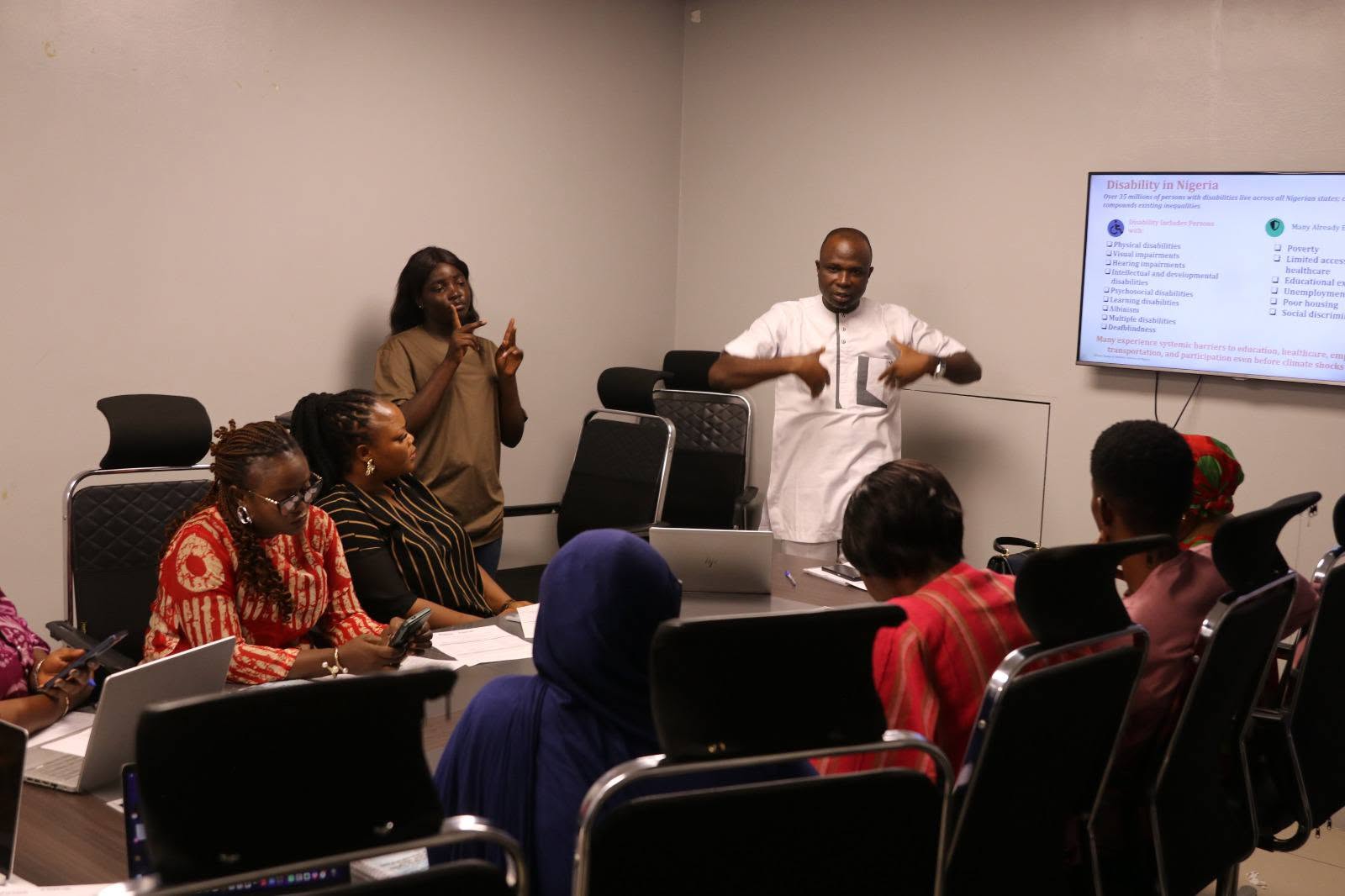
The call was made during a media engagement on disability-inclusive climate action held in Abuja by Inclusive Friends Association, where journalists and stakeholders were urged to move beyond conventional climate reporting and pay greater attention to how climate change and climate-related disasters affect people living with disabilities.
The engagement sought to strengthen journalists’ understanding of disability-inclusive climate action and promote accurate, inclusive and sustained reporting on climate issues affecting women and girls with disabilities in Nigeria.
The Executive Director of the Inclusive Friends Association, Grace Jerry, stressed the need for journalists to ensure that the experiences of women and girls with disabilities are reflected in climate reporting and wider public conversations.
She also highlighted the importance of strengthening journalists’ capacity to use evidence and practical reporting approaches to tell more inclusive stories about climate change and disability.
Speaking on “Climate and Disability Inclusion in Nigeria,” Kehinde of the National Commission for Persons with Disabilities (NCPWD), emphasised the importance of using appropriate and respectful language when communicating issues around climate change and disability.
He also shared data and statistics on disability inclusion and called for stronger storytelling around disability-inclusive climate action.
Discussions at the engagement highlighted that Nigeria already has policy frameworks addressing climate change and disability, but a major challenge remains: translating commitments on paper into meaningful implementation.
Nigeria’s National Climate Change Policy and National Adaptation Plan provide frameworks for responding to climate risks. The Department of Climate Change also identifies flooding, heatwaves, drought, erratic rainfall, desertification and sea-level rise among the climate risks affecting different parts of the country.
However, participants noted that climate policies cannot be genuinely inclusive if the people most affected by climate risks are not meaningfully involved in their design, implementation and evaluation.
For persons with disabilities, the consequences of exclusion can be particularly severe. An emergency warning that cannot be accessed by someone with a hearing or visual impairment, an evacuation centre that cannot accommodate wheelchair users, or a climate adaptation project designed without consulting people with disabilities can turn an already dangerous climate event into an even greater crisis.
The engagement called on journalists to look beyond the conventional climate story and investigate whether climate responses are reaching everyone. Journalists were encouraged to ask whether emergency warnings are accessible to people with hearing or visual impairments and whether evacuation centres are accessible to wheelchair users and others with mobility challenges.
They can also investigate whether climate adaptation projects adequately account for disability and ask government agencies how disability-disaggregated data is being collected, analyzed and used in climate planning.
The gathering also highlighted the urgent need for better disability-disaggregated data. Without reliable information on how climate risks affect people with different disabilities, policymakers may struggle to identify who is being left behind, where vulnerabilities are greatest and whether climate interventions are reaching the people who need them most.


No comment